 The Walking Club
The doorbell may signal an exciting or worrying visitor. Begin by managing the real doorway: give your dog a comfortable space away from the door while people arrive. If your dog is fearful, they need not greet visitors. Do not rehearse at full volume when your dog is already barking and distressed.
Play a doorbell recording at a low volume that your dog notices without becoming worried, then offer a reward. If they react, lower the volume or create more distance. Separately, reward them for choosing a bed or mat. Once each piece is comfortable, try the quiet sound and cue the bed, rewarding the choice. For more practice around the sound and arrivals, see the doorbell and visitor guide, keep the real doorway safely managed while you train.
Practice with a helper, then a real knock, while your dog remains comfortable. Let household members know the plan and use a sign asking visitors not to ring during practice if that helps. A dog may still give an alert bark, the aim is a manageable routine, not forced silence. For a dog who growls, lunges, or has bite risk around visitors, maintain secure separation and seek qualified help.
Choose what fits. Nothing is saved or submitted.
The article is the start. The guide is the full method.
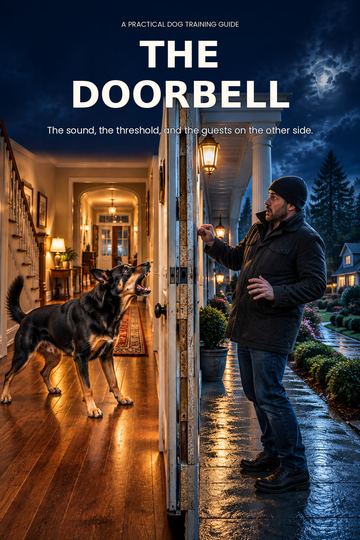 The DoorbellThe complete guide to arrivals and the door · $9.99Read the guide →This guide is part ofThe Four Walls PackFive guides for life inside your four walls.
Describe your dog's problem and get the guidance that fits. No account needed to look.
Describe your dog's problem →