 The Walking Club
You close the door. Your dog barks. Is this separation anxiety, boredom, a reaction to hallway noise, or something else? The bark alone cannot tell you. The first useful step is to see what actually happens after you leave.
Set up a safe camera or phone recording for a brief absence. Note when barking begins and whether it stops. Look for pacing, panting, drooling, attempts to escape, or damage concentrated near doors and windows. The ASPCA notes that dogs with separation anxiety may show distress soon after departure, and that escape attempts can injure them. A recording gives you observations, not a diagnosis, but it keeps you from building a plan around a guess.
If the recording shows panic, repeating long absences and hoping the dog will "get used to it" can leave the dog distressed. The ASPCA describes treatment as gradual exposure to being alone without triggering fear. In practice, that means working at a duration the individual dog can handle, often beginning with extremely short separations and advancing only while the dog stays comfortable. There is no universal starting number of seconds.
While you work on a plan, arrange care or company for unavoidable long absences where possible. This is a management bridge, not a cure and not always easy to arrange. If your dog is injuring themselves or cannot tolerate even tiny absences, ask your veterinarian promptly for help and a referral to a qualified behavior professional. The ASPCA also discusses veterinary treatment for more severe cases.
When does it happen? If barking starts after you leave, record a short, safe absence and look for signs of distress. If it starts while you are home, note the sound or activity that precedes it. The two patterns need different plans, do not diagnose either from the bark alone.
Some dogs start worrying at the keys, shoes, or bag, before anyone leaves. Write down the earliest cue that changes your dog's behavior. That cue may need gentler practice too. Do not repeatedly fake departures if each rehearsal sends your dog into panic, work from a level the dog can tolerate.
Keep a plain log: date, length of absence, time barking began, other distress signs, and whether the dog settled. Compare recordings rather than relying on what a neighbor heard through a wall. A quieter minute is progress, but silence alone is not proof a dog feels safe: look at the whole dog.
If the behavior is new or has intensified, a veterinary check can help rule out health issues and guide next steps. Your aim is not to make the dog "obey" the closed door. It is to help the dog feel safe on the other side of it, at a pace they can actually manage. If the recording shows real distress when your dog is alone, the separation-anxiety guide is a deeper resource to discuss alongside veterinary or qualified behavior support.
Further reading: ASPCA, “Separation Anxiety,” https://www.aspca.org/pet-care/dog-care/common-dog-behavior-issues/separation-anxiety .
Choose what fits. Nothing is saved or submitted.
The article is the start. The guide is the full method.
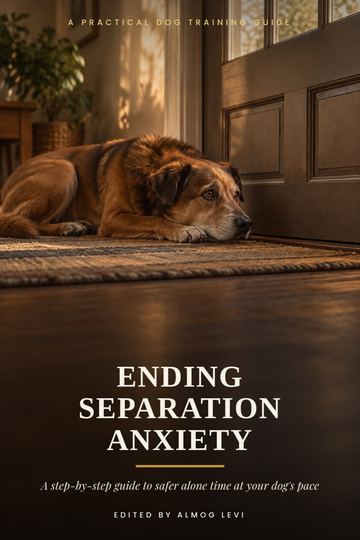 Ending Separation AnxietyThe complete guide to home alone · $9.99Read the guide →This guide is part ofThe Quiet Hours PackFive guides for the hours he spends without you.
Describe your dog's problem and get the guidance that fits. No account needed to look.
Describe your dog's problem →