 The Walking Club
The walk begins and your dog is already at the end of the leash. Your instinct may be to pull back harder or try a new piece of gear. But the first training question is simpler: what gets your dog where they want to go?
Dogs Trust explains that dogs can learn pulling moves the walk forward. That is not the whole story. A dog may also pull toward something exciting, away from something frightening, or because a busy environment is overwhelming. Watch the dog, not only the leash. If the walk has suddenly changed, or your dog stops, limps or seems unwell, speak to your veterinarian.
Choose a quiet place and a short practice period. Bring a reward your dog genuinely wants. When the leash is loose, reward near your leg and move forward together. If they pull toward a smell or a person, make the next repetition easier by turning away or adding space before they are fully focused on it. Dogs Trust recommends rewarding loose-leash choices and moving away early from things your dog is likely to pull toward.
The goal is not a rigid heel for an entire walk. It is a dog learning that staying connected to you can still lead to good things, including a safe opportunity to sniff. Keep the leash secure and avoid a tug-of-war, tension can make a dog feel trapped or unsteady, especially if the pulling is tied to fear.
A comfortable, well-fitted harness can support handling. It does not itself teach a dog how to walk on a loose leash. Dogs Trust cautions against treating “no pull” products as quick fixes and recommends teaching the behavior alongside suitable equipment. If your dog is strong enough to pull you off balance, ask for hands-on help and choose safe routes while you build the skill.
If your dog barks or lunges toward other dogs, pulls to escape, or cannot focus around a particular trigger, a basic loose-leash drill may not address the underlying emotion. Make room and work with your veterinarian and a qualified behavior professional where safety or distress is involved.
For today's walk, count the small wins: one slack step, a reward at your side, and another chance to sniff without a taut leash. Build the route gradually, not in one perfect afternoon. For more everyday practice without turning the walk into a contest, see the loose-leash walking guide.
Choose what fits. Nothing is saved or submitted.
Source: Dogs Trust, “Dog walking problems, pulling on leash and how to help,” https://www.dogstrust.org.uk/dog-advice/training/unwanted-behaviours/pulling-on-lead .
The article is the start. The guide is the full method.
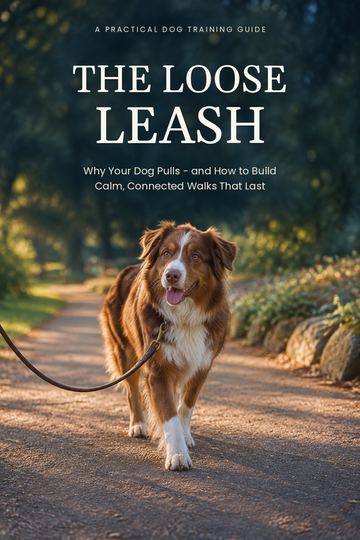 The Loose LeashThe complete guide to pulling on leash · $9.99Read the guide →This guide is part ofThe Around-the-Block PackFive guides for everything the walk throws at you.
Describe your dog's problem and get the guidance that fits. No account needed to look.
Describe your dog's problem →