 The Walking Club
A dog who comes when called in the kitchen may not be ready to return from an open field. A long line can give them more room to explore while you practise recall without gambling on an off-lead escape. It is still a lead: you remain responsible for its length, tension and surroundings.
Choose a suitable long line attached to a comfortable, well-fitted harness, not a neck collar. Start with a length you can manage. Practise in a quiet open area away from roads, bicycles, unfamiliar dogs, horses, steep edges and places where the line can catch a person or object. Follow local lead rules. Hold the line and manage slack so it does not wrap around legs, dogs or equipment. Avoid letting the dog build speed to the end of the line or abruptly stopping them with your foot. Ask a qualified reward-based trainer for hands-on help if you are unsure how to handle it safely.
Dogs Trust recommends first teaching recall in an enclosed low-distraction area, rewarding the dog for coming, then gradually increasing distance and distractions with a long line attached to a harness. Say the cue when your dog is likely to respond. Reward them for returning, and sometimes let them explore again. If they do not come, stay calm, reduce the difficulty and gently guide or collect them, never jerk them toward you. Practise shorter, easier returns before trying again farther away.
A longer line, a more distracting place and a busier time of day are three different challenges. Increase one only when the dog and handler are comfortable with the present setup. A successful return in an enclosed field does not prove safety near a road or wildlife. Keep the line while you practise in new places, and use off-lead freedom only where it is safe, permitted and your dog's recall suits the actual environment.
A line dragging loose through a crowded space can tangle around people or animals. Stepping on it to stop a running dog can cause a sudden jolt or trip the handler. Clipping it to a collar may put force on the neck. Calling at a distance where the dog cannot respond rehearses ignoring the cue. Removing the line after a few good recalls leaves no backup for a difficult surprise.
If your dog pulls hard enough to unbalance you, repeatedly runs away or cannot respond around other animals, stop practising in that setting and get individual help. A sudden loss of responsiveness is also worth a veterinary check. The long line supports recall training, it cannot make a risky location safe on its own. For the recall skill that the long line helps you practice, see the recall training guide.
Choose what fits. Nothing is saved or submitted.
Sources: Dogs Trust, 'How to train your dog to come back when called'.
The article is the start. The guide is the full method.
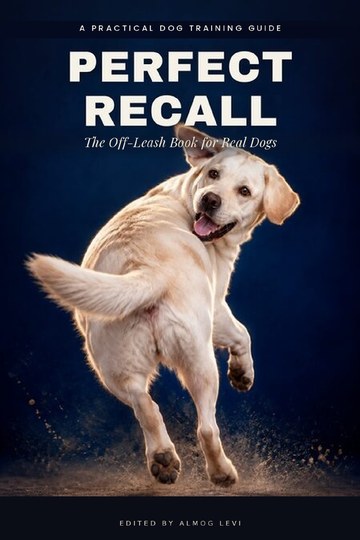 Perfect RecallThe complete guide to a recall that holds · $9.99Read the guide →This guide is part ofThe Around-the-Block PackFive guides for everything the walk throws at you.
Describe your dog's problem and get the guidance that fits. No account needed to look.
Describe your dog's problem →