 The Walking Club
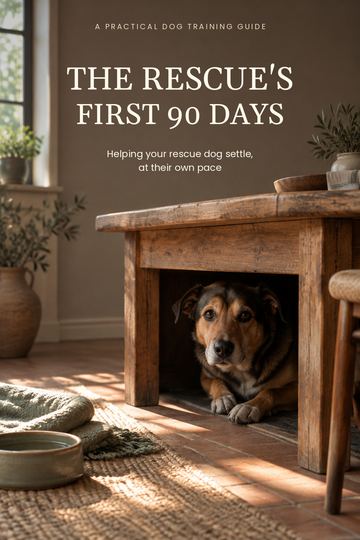
The new dog has chosen a spot behind the table. You imagined a walk, a photo and a cuddle. They have chosen distance. That is not a verdict on you. They may have left a shelter, foster home or another household and now need to learn where they are safe.
Dogs Trust advises letting a rescue dog settle at their own pace, avoiding visitors in the first few days, offering a den area and building a predictable routine. You can be available without asking them to interact. Your first week is less about teaching commands than about learning what helps this dog relax.
Choose a quiet area away from busy foot traffic. Offer comfortable bedding and a way to reach water. Let the dog enter and leave without being followed. If they have chosen a safe hiding place, don't drag them out simply because you have prepared a different bed. You can place the new bed nearby and see what they choose. Keep the route to toileting clear, and follow the rescue's instructions on safe handling and outdoor equipment.
Ask everyone in the home to leave the dog alone when they retreat. That includes visitors and children. If a child is in the household, actively supervise and use a secure barrier when you cannot. Do not rely on the dog to tolerate a child crawling into their space. Avoid a welcome party. A quiet first few days give you a clearer picture of the dog's baseline behavior.
Sit at a comfortable distance and do something ordinary. The dog may look at you, approach or continue resting. If they take treats, toss one away from you so they can collect it without moving closer than they want. Do not lure them near your hands and then grab the collar or try to pet them. A dog who chooses to approach should also be free to leave.
Preserve what you can from their prior routine. Ask the rescue or previous caregiver about food, meal times, walks, sleep and things they fear. Keep food familiar at first where possible, and discuss diet changes with your vet. Give regular toilet opportunities but avoid an ambitious tour of crowded streets. Check that identification details are current and register with a local veterinarian.
Hiding can be part of adjusting. Persistent refusal to drink, repeated vomiting, diarrhea, marked weakness or pain needs veterinary advice. If the dog does not eat, ask the vet how urgently they should be seen based on their age and condition. Don't simply wait for a vague "settling period" when the dog may be sick.
If intense fear persists or worsens, ask the rescue and your vet for support. A qualified behavior professional can help you make a plan rather than trying increasingly forceful introductions. Also consider whether the dog has a safe route to resources. A dog who cannot reach water without passing a person they fear may stay hidden for practical reasons.
Pulling the dog from a hiding place to show them the house teaches that the retreat is not safe. Following them from room to room in the hope of bonding can do the same. Taking them to a busy park on day one may add more to process than they can manage. Punishing an accident or a growl can make a worried dog less safe, not more obedient. Provide distance and adjust the environment instead.
Look for ordinary changes: the dog drinks while you are nearby, rests with a looser body or explores when the room is quiet. Keep a simple diary of food, water, toileting, rest and what they choose to do. This helps you notice health changes as well as growing comfort. Do not use an online three-day or three-week rule to decide when they must stop hiding. Dogs and their histories differ.
Ask the rescue and vet for support if fear is intense, worsening or preventing access to essentials. Seek prompt veterinary advice for illness, pain, poor intake or weakness rather than waiting for the dog to settle. Necessary care should not wait until every handling exercise is comfortable. Tell the clinic what the dog currently tolerates so the visit can be planned kindly.
Today, protect one quiet retreat, put water within easy reach and let the dog choose whether to approach. The Rescue's First 90 Days can help you organize the wider early-weeks routine. It is a planning guide, not a countdown that every rescue must follow.
Choose what fits. Nothing is saved or submitted.
Sources: Dogs Trust: Helping a Rescue Dog Settle, VCA: Emergencies in Dogs.
The article is the start. The guide is the full method.
 The Rescue's First 90 DaysThe complete guide to a rescue's first months · $9.99Read the guide →This guide is part ofThe Welcome Home PackFive guides for a rescue's first months with you.
Describe your dog's problem and get the guidance that fits. No account needed to look.
Describe your dog's problem →