 The Walking Club
Your dog used to lead you around the block. Now they stop at the corner, look toward home and wait. The old route may have been a good route for last year's dog. It is not a standard they have to meet today.
PDSA recommends regular, gentle exercise for many older dogs and suggests "little and often" rather than pushing a long outing. That is a general principle, not a diagnosis. If a dog suddenly cannot complete a familiar walk, pain, illness or other changes may be involved. A vet can help you decide what activity is safe for this particular dog.
Choose an out-and-back route with an easy turnaround instead of a loop that leaves you a long way from home. Let your dog set a comfortable pace and spend some time sniffing. A walk can still be satisfying if it covers less ground. Plan shorter trips more often if their condition and your vet's advice support it. Note whether they walk differently on the way out and the way home, or whether a particular surface or incline is hard.
Watch the weather. Older dogs may cope less well with extreme heat or cold. On a difficult day, a short toilet outing plus a gentle indoor search or puzzle may meet some needs without asking them to battle conditions that hurt or exhaust them. Provide a safe resting area when you return.
When did the stopping begin? Is it every walk or only after a long one? Do you see stiffness after resting, limping, panting, stumbling, reluctance to climb stairs or trouble rising? A brief video of normal movement and the difficult moment, recorded without pushing the dog, can be useful. Ask for a veterinary assessment if the change is new, worsening or accompanied by other symptoms. Seek prompt care for collapse, major weakness, breathing difficulty or obvious pain.
A support harness or sling may help some dogs, but it must fit and be used properly. Ask the vet or a rehabilitation professional whether one is appropriate. Don't pull a dog forward by a leash to finish the old route. Do not give human pain medicine without veterinary instruction. Some are dangerous to dogs.
Your older dog may still enjoy movement, smells and your company. Shortening the walk is not depriving them of those. You can choose a familiar quiet street or a spot where they can sniff without being rushed. If they have arthritis or another diagnosed condition, work with the vet on a repeatable plan for exercise, weight and pain management. Some dogs need more activity, some less, and the plan can change over time.
Do not assume the answer is a complete stop to walks unless a vet advises it. Too little movement can also make some dogs stiff. The point is to find a comfortable level, not to alternate between a long weekend hike and five days on the couch.
One is pushing through because the dog "always loves walks." Another is thinking a wagging tail proves a dog cannot be in pain. Some dogs will try to keep up despite discomfort. At the other extreme, a new hesitation should not be written off as "just age" without a check. Notice patterns and give the vet facts.
Arrange a veterinary check for a new or worsening loss of stamina, altered gait or reluctance to walk. Seek urgent care for collapse, major weakness, breathing difficulty or severe pain. Do not keep walking to find out whether those signs improve. Tell the clinic when the change started, what the dog can comfortably do and any other changes in appetite, thirst, rest or medicine.
For the next comfortable outing, choose a familiar route with an easy return and no pressure to reach a landmark. Record what your dog chose and how they moved afterward. Once new changes have been checked, The Senior Switch can help with the wider routine adjustments around comfort, rest and activity. It does not prescribe an exercise allowance or replace treatment for the cause of reduced stamina.
Choose what fits. Nothing is saved or submitted.
Sources: PDSA: Exercising Your Senior Dog, VCA: Emergencies in Dogs.
The article is the start. The guide is the full method.
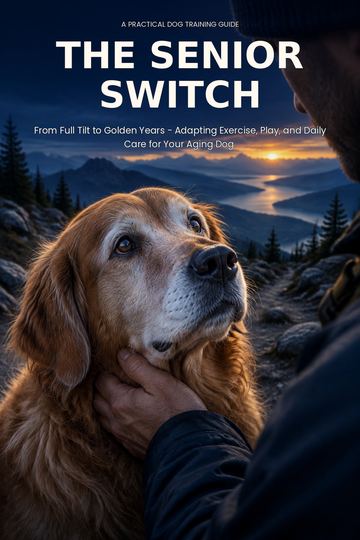 The Senior SwitchThe complete guide to the older dog · $9.99Read the guide →This guide is part ofThe Quiet Hours PackFive guides for the hours he spends without you.
Describe your dog's problem and get the guidance that fits. No account needed to look.
Describe your dog's problem →