 The Walking Club
Barking is communication. Dogs may bark because they're excited, worried, frustrated or trying to get something. A new burst of barking can also be a clue that something has changed, including health or hearing. Before choosing a way to stop the sound, notice when it happens: who's there, what your dog can see or hear, and whether they can settle again.
If the front window sets your dog off, close the blind or give them a quieter room before the busy delivery window. Keep a few treats there. When someone approaches and your dog is still able to notice you, reward a glance back at you or a move away from the window. Make the first practice easy. You are not trying to wait for a barking fit and then distract your dog out of it.
If two dogs set each other off, first give each dog a separate quiet spot. Work at a distance and time when each can still respond. Later, you can practice with one dog at a time, then build back up. Don't punish one dog for a reaction started by the other.
If the barking happens when nobody is home, don't assume it's the same problem as barking at the window. Record a short, safe absence to see what happens in the first minutes, and seek qualified help if your dog shows distress. If the barking has suddenly changed, talk with your vet before treating it as a training problem.
An animal-welfare group warns that ultrasonic deterrents can cause distress and do not address why a dog is barking. We would skip that shortcut. The goal isn't a dog who never makes a sound. It's a dog who can handle the situation, and a home where you can respond before barking takes over.
Tonight, choose one predictable trigger, such as the usual delivery time. Give your dog a quieter view before it happens. Notice the first moment they hear it, and reward a calm glance toward you. If they're already upset, add distance instead of asking for a cue.
If you are not sure which pattern you are seeing, describe the moment in the AI trainer for a starting step.
Choose what fits. Nothing is saved or submitted.
Sources: RSPCA on barking. SPCA NZ on ultrasonic deterrents. AVSAB on reward-based training.
The article is the start. The guide is the full method.
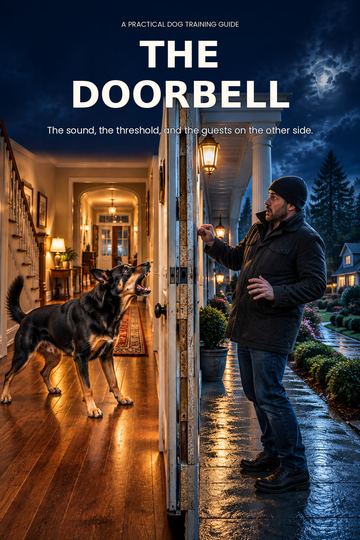 The DoorbellThe complete guide to arrivals and the door · $9.99Read the guide →This guide is part ofThe Four Walls PackFive guides for life inside your four walls.
Describe your dog's problem and get the guidance that fits. No account needed to look.
Describe your dog's problem →