 The Walking Club
Short answer: dogs shake for many reasons. Cold, fear or stress, a quick shake after play, and being wet are common ones. Pain, illness, a seizure or something they ate can also cause it. The next step is simple: look at what else is going on, and call your vet if the shaking is sudden, keeps going, or comes with other changes. A quick call is always fine.
Shivering is how a dog warms up. Move your dog somewhere warm and give them a cosy bed or a coat or jumper on cold days. If your dog is shivering and also seems sluggish, call your vet.
A scared or worried dog may tremble, often with other signs. Look for panting, hiding, a tucked tail, ears pinned back, yawning or lip licking, or the whites of the eyes showing. Common triggers are fireworks, storms, loud noises, vet visits and being left alone. Gently move away from what is worrying them if you can. If it keeps happening, ask your vet to check your dog is well, then ask for a qualified behaviourist to help.
A full-body shake after a bath or a swim, or after play or a stressful moment, is normal. It is a short, quick shake, and your dog goes back to normal straight after. Nothing to do here, though it is worth noticing what your dog just went through.
Shaking can be a sign that a dog is sore, unwell or feeling sick. It is more likely if the shaking is sudden, or comes with limping, a hunched back or tiredness. Shaking in the back legs, especially in an older dog, can mean achy joints or weaker muscles. Call your vet and describe what you are seeing. Some dogs also get a tremor condition that a vet can diagnose and treat, so it is always worth having ongoing shaking checked.
Shaking, twitching or wobbliness after your dog may have eaten something, such as a plant, a human food or a medicine, needs a call to your vet straight away. Please do not wait to see if it passes. Take any packaging with you, and tell your vet what it was and roughly when.
A seizure can look like shaking, but your dog may also go stiff, fall over, seem unaware of you, or wee or poo without meaning to. Stay calm and stay close. Move your dog away from stairs or furniture, clear a little space, and keep the room quiet and dim. Keep your hands away from their mouth. If you can do so safely, time the seizure and take a short video. Call your vet immediately if it lasts more than two minutes, another seizure follows, or your dog does not start to recover. If your vet is closed, call an emergency vet. Do not wait for the seizure to stop in these situations. After any seizure, contact your vet, including a first seizure. Do not restrain your dog or transport them during a seizure unless your vet tells you to.
Shaking on a hot day, especially with heavy panting, needs a call to your emergency vet right away.
If there are no emergency signs, take a breath and look at the whole picture. For a possible seizure, poisoning or overheating, follow the urgent advice above rather than waiting. Ask yourself four things: Is your dog cold, wet or just out of the water? Is something scaring them? Did they eat something they should not? Do they seem sore or unwell? If the shaking stops once the cause is gone, you can relax. If you cannot tell why your dog is shaking, it is sudden, it does not settle, or your dog seems sore or is not acting like themselves, please call your vet. If they are closed, an emergency vet can help.
Sources: Dogs Trust, shaking: dogstrust.org.uk. Blue Cross, signs of stress, storm anxiety and seizures. RSPCA, poisoning, heatstroke and cold weather. PDSA, seizure first aid, when to call during a seizure. VCA, stress signs, seizures and shaker syndrome. AVMA, cold weather. PetMD, why dogs shake.
General education only, not veterinary advice or a plan for your individual dog. If your dog is shaking and you are worried, please contact a vet. See our legal page.
Choose what fits. Nothing is saved or submitted.
This guide does not cover medical care. If your dog shakes at fireworks, storms or other loud sounds, it is a calm plan for those days.
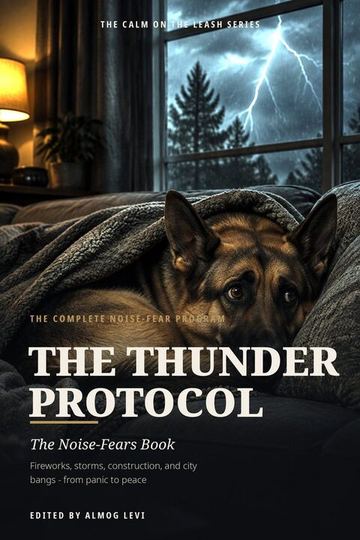 The Thunder ProtocolFireworks, storms and loud noise · $9.99Read the guide →This guide is part ofThe Quiet Hours PackFive guides for the hardest hours without you.
Describe your dog's problem and get the guidance that fits. No account needed to look.
Describe your dog's problem →