 The Walking Club
A sneeze is sudden, loud and close. Your dog might startle, become excited or try to find out what happened. The bark alone cannot tell you which. First prevent a rush into someone's face, especially around children or anyone who may be knocked over. Give your dog a comfortable resting place with some space from the conversation.
Watch what happens before and after the sneeze. Does your dog recover quickly, retreat, or stay tense and scanning? If this is a new severe reaction or part of a wider change in sound sensitivity, talk with your veterinarian. Do not deliberately sneeze beside a worried dog again and again to make them used to it.
When the dog is relaxed, reward choosing their mat during ordinary household sounds. If a sneeze happens naturally, calmly give them room and reward a comfortable recovery. A qualified reward-based trainer can help if the rushing is intense or hard to manage. The noise-fear guide is relevant if other abrupt sounds cause similar distress, not because every bark at a sneeze is a phobia.
Today, make a little space before someone with a cold settles in the room. The useful goal is a safe, calm recovery, not complete silence.
Sources: VCA on fear of noises and controlled practice. Dogs Trust on reading stress and giving space.
The article is the start. The guide is the full method.
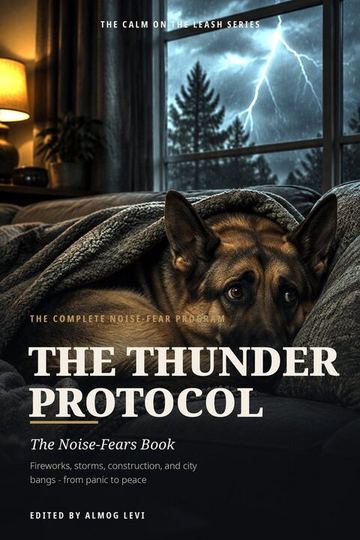 The Thunder ProtocolThe complete guide to noise fear · $9.99Read the guide →This guide is part ofThe Quiet Hours PackFive guides for the hours he spends without you.
Describe your dog's problem and get the guidance that fits. No account needed to look.
Describe your dog's problem →